e.L.T. Mesens
ABOUT THE ARTIST
Édouard-Léon-Théodore Mesens, known as E.L.T. Mesens (Brussels, 1903-1971), pianist, composer, poet, writer, polemicist, publisher of surrealist magazines, gallerist, art collector and visual artist, was a founder of surrealism in Belgium, and one of its most singular and active figures.
Born in Brussels on 27 November 1903 into a middle-class family, he seemed destined to follow in his father's footsteps as a successful chemist. But his mother's fascination with music steered him in a different direction at an early age. At the age of twelve, he learned the violin, then turned to the piano. At fourteen, he composed his first work based on a poem by Rodenbach. Two years later, his discovery of Debussy, Ravel and, above all, Erik Satie, opened up new perspectives for his imagination. Radicalism became his raison d'être.
Curious about everything, he drew inspiration from other models, notably Paul-Gustave Van Hecke, a central figure in the Brussels art scene between the wars, who ran a fashion house, an art gallery and an avant-garde magazine with his partner Norine. There, the young Mesens discovered the power of layout, graphic design and typography as forms of artistic expression in their own right.
In 1920, at the age of seventeen, he had two decisive encounters. The first was with René Magritte, then a student at the Beaux-Arts, six years his senior, with whom he shared escapades, provocations and passionate discussions. The second was with Erik Satie, whom he met at the Galerie du Centaure and who, some time later, introduced him to Tristan Tzara, founder of Dadaism. This direct contact with Dada had a profound effect on him. In Paris, he discovered a world where music, poetry and the visual arts merged in a single wave of subversion.
Back in Brussels, he became one of the main leaders of the Belgian surrealist group. He participated in the creation of magazines such as Œsophage and Marie, organised exhibitions, published brochures and was extremely active. At barely twenty-year-old, he worked in the Le Manteau and La Vierge Poupine galleries, where he exhibited Max Ernst's L'Histoire naturelle, before taking over the L'Époque gallery at the invitation of Van Hecke. There he presented modern photography — Berenice Abbott, Man Ray, Moholy-Nagy — which was then unknown to the general public.
Mesens then founded Éditions Nicolas Flamel (1931), which published major surrealist texts, including Femme complète and Alphabet sourd aveugle, bringing together contributions from André Breton, Paul Éluard, Salvador Dalí, Max Ernst and Yves Tanguy.
The economic crisis of the 1930s hit the art world hard. Galleries closed and collectors became scarce. When the Le Centaure gallery went bankrupt in 1932, Mesens bought 150 works by Magritte for 5,000 francs, thus preserving an essential part of his friend's œuvre.
In 1936, he left Belgium for London, where he joined the intellectual circles gathered around the painter Roland Penrose. Together, they founded the London Bulletin magazine, a showcase for international surrealism, and organised the International Surrealist Exhibition, bringing together 69 artists and more than 360 works — paintings, sculptures, collages, found objects and pieces of African and Oceanic art. The exhibition was a huge success, attracting 23,000 visitors in 24 days.
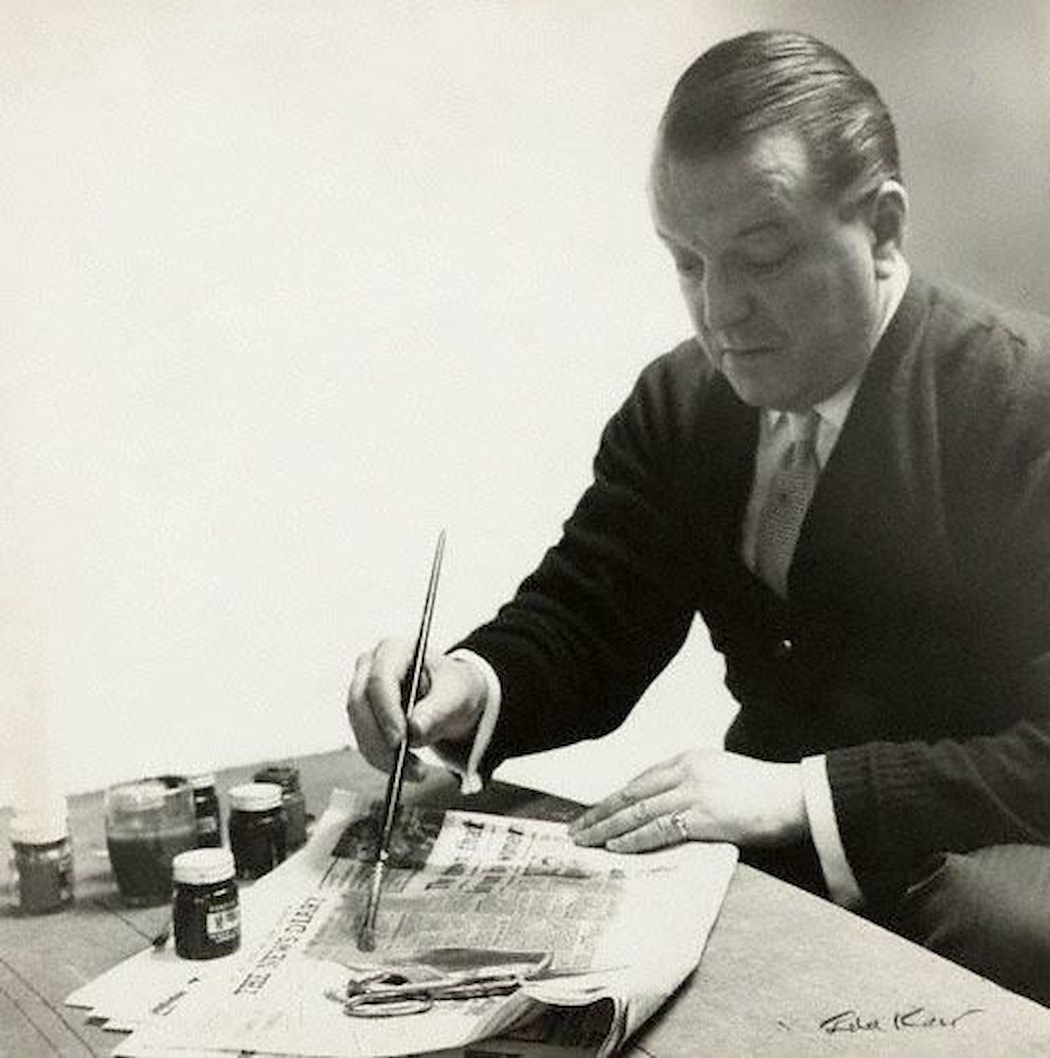
The Second World War brought this effervescence to an abrupt halt. After the conflict, Mesens returned to Brussels and devoted himself to the art of collage, which he practised with a mixture of irony, poetry and formal freedom. In the 1950s, he exhibited in Paris, London, Milan and Venice, published his Poèmes 1923–1958 illustrated by Magritte in 1959, and organised a major retrospective dedicated to Magritte at the Palais des Beaux-Arts in Brussels in 1954.
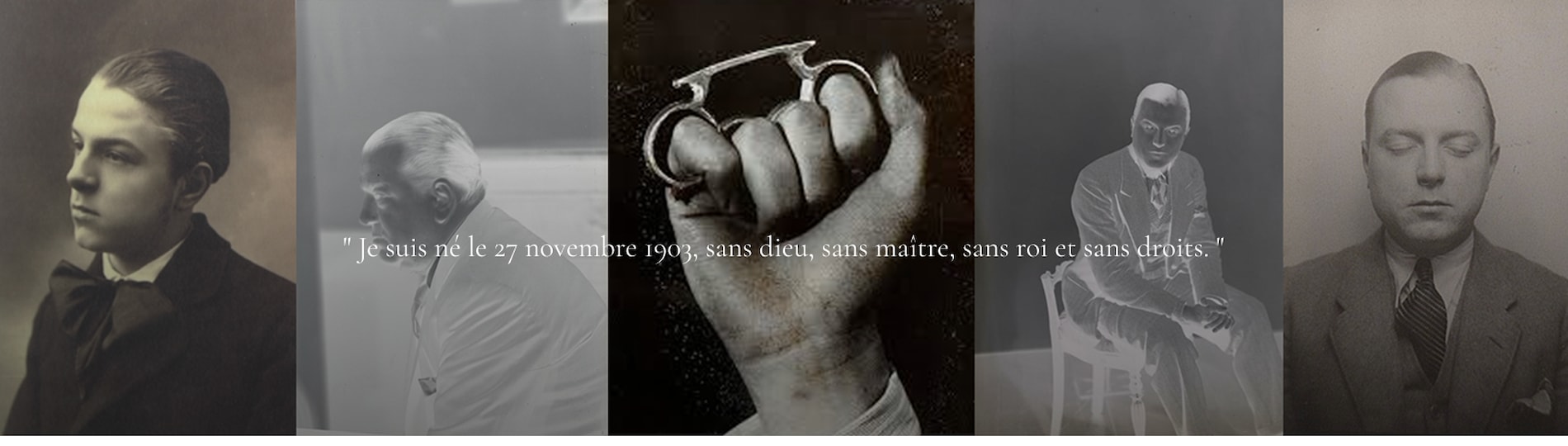
Often referred to as the “homme-orchestre” (the “one-man band”) of Belgian surrealism, Mesens was a musician, poet, publisher, collector, critic, organiser and creator. Until the end, he embodied the spirit of independence and provocation of the movement. As he himself wrote, he lived “without God, without master, without king and without rights”.
Today, his creations are part of major Belgian and international museum collections, including Musées Royaux des Beaux-Arts de Belgique, Brussels; Musée d'Ixelles, Brussels; Fondation Roi Baudouin, Brussels; René Magritte Museum, Jette; Koninklijk Museum voor Schone Kunsten, Antwerp; Museum voor Schone Kunsten, Ghent; Musée des Beaux-Arts de Mons; Mu.ZEE, Ostend; Verbeke Foundation, Kemzeke; Tate Modern, London; J. Paul Getty Museum, Los Angeles; National Gallery of Art, Washington D.C.; Art Institute of Chicago; Stedelijk Museum Amsterdam; Museum Arnhem; Alychlo-Marc Coucke The Hands of Art Collection, Durbuy, and of many other important private art collections.